
As inflation rate is near the upper limit of the comfort zone, experts rule out rate cuts anytime soon

The one-time restructuring of loans will help every firm and prevent cost-cutting measures such as lay-offs.

RBI rate cut is a welcome step for all citizens of India as everyone is looking for near-term boost in economy.

The need for money among banks, especially for short-term funds, may turn more intense in the last month of the financial year to feed the demand for capital for tax payments and meet year-end targets. The mobilisation of funds via the certificate of deposits (CDs) has seen a threefold increase to over Rs 60,000 crore in the fortnight that ended February 23 from around Rs 20,000 crore in the fortnight of January 26, 2024, according to the Reserve Bank of India (RBI) data.

Bankers do not expect any major changes in key interest rates by the Reserve Bank in its quarterly review of the monetary policy on October 31.

As the policy rate has seen a steady increase since May 2022, the percentage of loans offered at interest rates below 8 per cent have declined sharply, dropping from 53 per cent in March 2022 to 18 per cent by June 2023, according to a report by the Reserve Bank of India (RBI). The share of bank loans with interest rates of 10 per cent or higher rose from 22 per cent to 34 per cent during this period, reflecting the impact of a 250 basis point (bps) hike in the policy repo rate by the RBI's Monetary Policy Committee. In response to the rise in repo rate, 32 domestic banks have made corresponding upward revisions to their repo-linked external benchmark-based lending rates (EBLRs), aligning them with the magnitude of the rate hike.

Only three of India's 45 commercial banks have cut base lending rates since the Reserve Bank of India's surprise easing this month, hurting the government's drive to lift business investment.

Benchmark equity indices Sensex and Nifty pared early gains to settle lower on Wednesday due to late selling in index major Reliance Industries, ITC and HDFC Bank even as the RBI took the first step towards a rate cut in its monetary policy review. Erasing its early gains, the 30-share BSE Sensex fell 167.71 points or 0.21 per cent to close at 81,467.1. During the day, it surged 684.4 points or 0.83 per cent to hit an intra-day high of 82,319.21.

Opinions vary, but fund managers remain bullish.

Equity indices made an emphatic comeback on Friday after falling for seven straight sessions after the RBI hiked interest rates by 50 basis points on expected lines and projected inflation coming under control from January next year. A strong recovery in the rupee added to the momentum, traders said. Overcoming a wobbly start, the 30-share BSE Sensex soared 1,016.96 points or 1.80 per cent to settle at 57,426.92. During the day, it rallied 1,312.67 points or 2.32 per cent to 57,722.63.

Already reeling under a demand slump, automobile manufacturers have expressed disappointment over the RBI's decision to hike short term lending rate saying it is likely to impact the interest rates on car and automobile loans further.

Market breadth depicted gains with 1,476 advances over 1,403 declines on the BSE. 140 stocks remained unchanged.

RBI will cut rates in its next policy announcement on June 2.

For banks to cut loan rates, the cost of deposits needs to come down, and there is no sign of that happening.

Wholesale price inflation rose to a 4-month high of 2.36 per cent in October as prices of food items, especially vegetables, and manufactured goods turned dearer, as per the government data released on Thursday. The wholesale price index (WPI) based inflation was 1.84 per cent in September 2024. It was (-) 0.26 per cent in October, last year.

Tata Steel was the top gainer in the Sensex pack, rising around 4 per cent, followed by Infosys, Bajaj Finance, TCS, HCL Tech, ICICI Bank and Tech Mahindra. On the other hand, Bharti Airtel, M&M, L&T and Axis Bank were among the laggards.

Hawkish tone likely to guard rupee from further slide

The RBI cut rates for third time in 2015 due to favourable economic conditions.

In the Sensex pack, Sun Pharma was the biggest gainer, rallying 4.48 per cent, followed by Bajaj Auto, Tata Motors, Coal India, Hero MotoCorp, Maruti and HCL Tech, rising up to 3.01 per cent. While, RIL, PowerGrid, HDFC, L&T, IndusInd Bank, NTPC and Bajaj Finance declined up to 1.50 per cent.

The new rates, effective Wednesday, is the third reduction by SBI in this financial year having cut the rates by 5 bps each in April and May, while its home loan rates has come down by 20 bps during this period.

Rajan said the central bank has used up all its "space available" to cut interest rates

But this might not be the best time to enter these, as probability of further reductions in near future is low

While the economy seems to be on a firm growth path, the fight against inflation is not over yet. Shaktikanta Das seems to be in no hurry. After playing well through a five-year Test match, he doesn't want to get out hit wicket, observes Tamal Bandyopadhyay.

The RBI's surprise rate hike may have been prompted by its inability to convince the government to cut excise duty on petrol and diesel and take other supply-side measures to tame runaway inflation, sources aware of the central bank's thinking said on Thursday. There has been a record Rs 10 a litre increase in petrol and diesel prices in a matter of 16 days beginning March 22, which has further fuelled the already high commodity prices. The RBI, which is mandated to ensure inflation is under 6 per cent, acted with a 0.40 per cent increase in repo rate to check prices before they went completely out of hand.

Inflation to peak in the current quarter within tolerance band, moderating in the second half of next fiscal, says central bank.

At interactions last week with senior officials from the Reserve Bank of India, select banks gave feedback on two key bond market concerns, namely, recent volatility in the rupee-dollar exchange rate and heavy losses incurred on floating rate government bonds due to a demand-supply mismatch, sources told Business Standard. The discussions were held ahead of the RBI's next monetary policy statement, scheduled on August 5. Indian banks are large holders of government securities because of a regulatory mandate to set aside a certain percentage of deposits in sovereign bonds.

Industry houses are emphatic with the RBI pruning repo rate and CRR by 0.25 per cent each after a long nine months in its third quarter monetary policy review.

Two members recommended bringing down the rate by 50 bps in the April policy.
It has already cut the rate three times this year to loosen credit and boost slowing growth in Asia's third-largest economy.

The chances of a rate cut in September have risen.

S&P Global Ratings on Tuesday cut India's GDP growth projections to 6.5 per cent for the next fiscal as it expects that economies in the APAC region will feel the strain of rising US tariffs and pushback on globalisation. In its Economic Outlook for Asia-Pacific (APAC), S&P said despite these external strains, it expects domestic demand momentum to remain solid in most emerging-market economies.
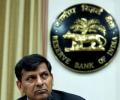
Better supply management and check on hoarding should be able to prevent food price spikes
.jpg)
RBI is scheduled to announce monetary policy on Tuesday.
The Reserve Bank of India in its quarterly monetary policy review has hiked rates.

So for the time being, consumers need not worry about their EMIs on home loans, auto loans etc. going up. However, as April progresses the scenario could change.

Uncertainty is emerging as the only certainty, said RBI Governor Shaktikanta Das as he emphasised on continued policy support at the December MPC meet during which members expressed concerns over spread of the Omicron variant of coronavirus, as per the minutes of the rate-setting panel released on Wednesday. After three days of deliberations, the six members of the Monetary Policy Committee (MPC) on December 8 unanimously voted for status quo on policy rates for the ninth consecutive time. At the meeting, the RBI Governor said risks stalking the global economy have amplified with rapid spread of the virus mutations, including the Omicron variant, leading to countries scrambling for restrictions.

Equity benchmarks extended their decline for the fourth straight session on Wednesday, with the Sensex falling 214.85 points after the Reserve Bank raised the key interest rate by 50 basis points. Continuous foreign fund outflows and surging crude oil prices also weighed on markets. The 30-share BSE benchmark dropped 214.85 points or 0.39 per cent to settle at 54,892.49.

The banking system's liquidity slipped into deficit for the first time in the current financial year (2023-24) due to the imposition of the Incremental Cash Reserve Ratio (I-CRR) for banks and outflows from goods and services tax (GST) payments, according to dealers. Reserve Bank of India (RBI) data shows it injected Rs 23,644 crore on August 21. The last time liquidity was in deficit was on March 27, when the RBI injected Rs 45,575 crore.
